DrugCard
AI-driven tool streamlines multilingual pharmacovigilance literature screening.
Key Takeaways
- What it is
- AI-driven tool streamlines multilingual pharmacovigilance literature screening.
- Pricing
- Freemium
- Best for
- AI-Enabled Data Intelligence
- Multi-Language Support
- OCR Technology
- Rating
- 4.5/5
What is DrugCard?
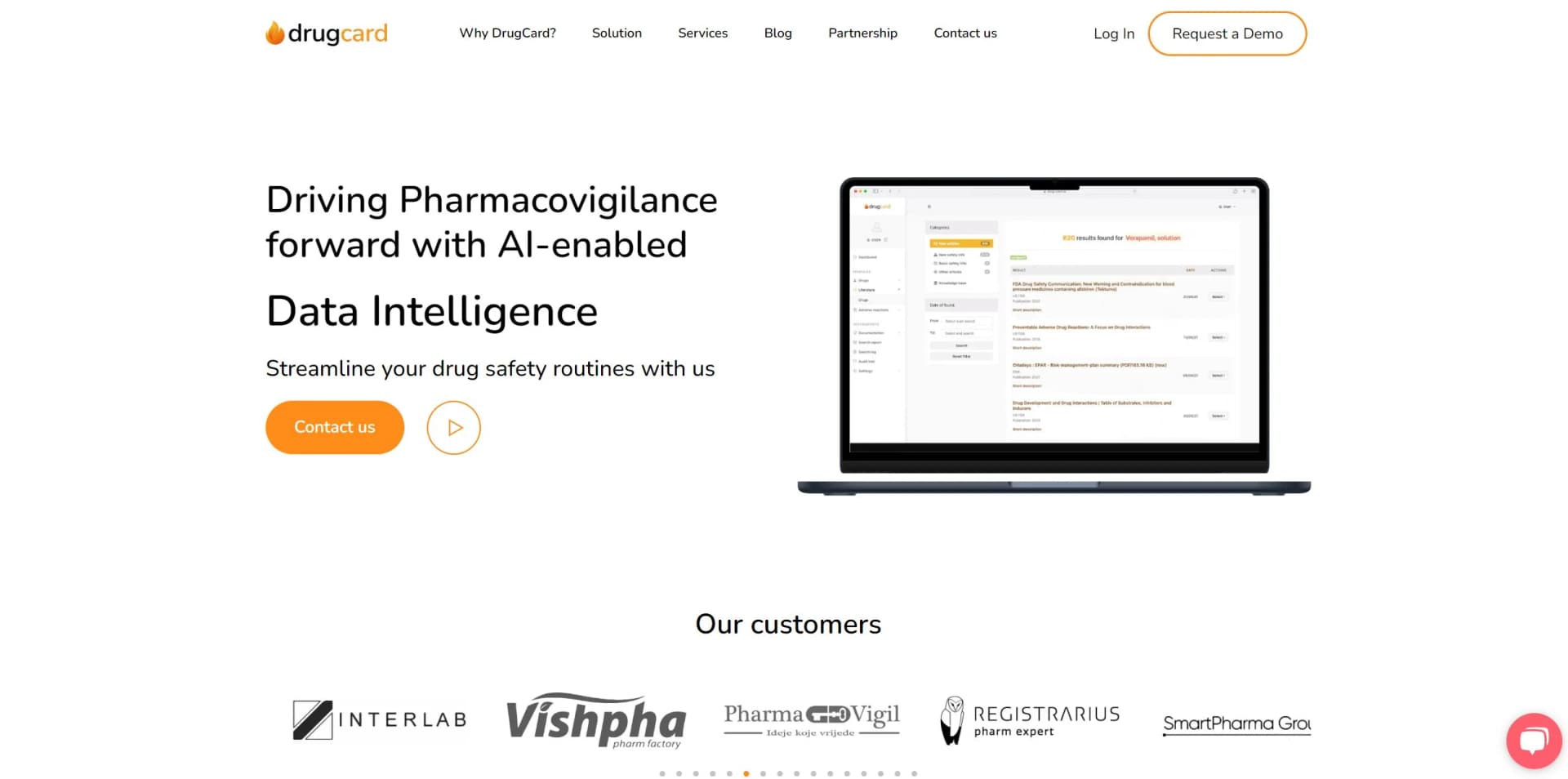
DrugCard revolutionizes pharmacovigilance, offering AI-driven solutions for local literature screening. Designed for Contract Research Organizations (CROs), Marketing Authorization Holders (MAHs), and freelancers, it simplifies the complex task of monitoring drug safety across multiple regions and languages.
DrugCard stands out with its AI-enabled data intelligence, a game-changer for pharmacovigilance. Its ability to process literature in over 100 languages and achieve high accuracy with poorly scanned texts sets it apart, making it an indispensable tool for global drug safety monitoring.
DrugCard offers an innovative approach to pharmacovigilance, streamlining literature screening with AI-driven precision and efficiency. Its robust features, combined with high accuracy and multi-language support, make it a valuable asset for organizations seeking to enhance their drug safety routines. With its cost-effective solutions and commitment to compliance, DrugCard is poised to be a leader in the global pharmacovigilance landscape.
Who is Using DrugCard?
Contract Research Organizations (CROs)
Enhancing pharmacovigilance projects with efficient literature screening.
Marketing Authorization Holders (MAHs)
Streamlining in-house and outsourced literature screening processes.
Pharmacovigilance Freelancers
Saving time and resources for more value-adding activities such as consulting and research.
Pharmaceutical Companies
Ensuring regulatory compliance across multiple regions and languages.
Uncommon Use Cases
Adopted by regulatory bodies for audit preparations; utilized by academic researchers for pharmacovigilance studies.
Key Features
Rating Breakdown
Pricing Plans
Free Tier
Free
- Experience DrugCard with a trial period customized upon request
DrugCard Use Cases
Global literature monitoring
Monitor PubMed, Embase, and other medical-literature databases on a recurring schedule.
Outcome: Deduplicated search results are reviewed in one queue.
Local literature screening
Track regional, non-indexed, and print-only medical journals across many countries and languages.
Outcome: Local sources become accessible alongside English-language literature.
AI-assisted article triage
Use AI relevance assessment, summaries, keyword highlighting, and categorization to prioritize publications.
Outcome: Teams focus attention on likely safety-relevant articles.
ICSR detection
Extract potential patient, product, and reaction data from literature and create an individual case safety report.
Outcome: A partially completed case can be opened directly in the adverse-event database.
Regulatory intelligence monitoring
Aggregate regulatory updates, summarize and categorize them, and deliver alerts and structured content.
Outcome: Regulatory teams receive continuously updated compliance information.
Workflow Ideas with DrugCard
Set up automated literature monitoring
- 1Create a project and select countries and coverage.
- 2Identify the products and sources to monitor.
- 3Review instant results, notifications, and weekly automated reports.
Screen and document safety-relevant articles
- 1Let DrugCard pre-assess publications for pharmacovigilance relevance.
- 2Review summaries, translations, keyword matches, and extracted safety information.
- 3Save categorization, notes, QC actions, and audit-trail records.
Process an ICSR from literature
- 1Open an article identified as a potential safety case.
- 2Review AI-extracted patient, reaction, and active-substance data.
- 3Create an ICSR draft in the DrugCard adverse-event database and validate it.
How DrugCard fits into your stack
Browser
DrugCard is a SaaS platform accessed through its web application for literature monitoring, regulatory intelligence, safety databases, and reporting.
Knowledge and files
The platform centralizes medical literature, regulatory updates, adverse-event records, reports, audit trails, and imported E2B files.
Team workflows
Teams define users, roles, responsibilities, and access levels while collaborating across pharmacovigilance projects and countries.
Pros
- +Time Efficiency: Users report a 50-70% reduction in time spent on literature screening compared to manual methods.
- +High Accuracy: Achieves 99% accuracy in keyword recognition, minimizing errors in data collection.
- +Cost-Effective: Eliminates the need for heavy CAPEX investments, offering a budget-friendly solution for pharmacovigilance.
- +Improved Compliance: Provides traceable and transparent processes, aiding in regulatory compliance and reducing audit risks.
Cons
- −Initial Learning Curve: New users may require some time to become familiar with the platform's advanced features.
- −Limited Customization: While flexible, specific customization options might be limited without direct consultation with DrugCard's team.
Limitations & when to consider alternatives
Known limitations
- Trial rather than a permanent free plan. The public site advertises a free two-week trial, not a continuing $0 plan.
- Human confirmation remains required. AI relevance scores, summaries, notes, categorizations, and extracted case data require specialist review and confirmation before becoming official records.
- New-country setup takes time. Adding a new country or journal package typically takes about two to three weeks.
- Coverage depends on configured sources. Projects require selected countries, products, source lists, and search strategies; source additions may require setup.
Look elsewhere when
- You need a native mobile application.
- You need a downloadable desktop application.
- You need fine-tuning on your own data.
- You need documented public API endpoints and developer keys.
How to Use DrugCard
- 1
Create a project
Select countries, define global or local coverage, and identify the medicinal products to monitor.
- 2
Configure sources and search strategy
Use global databases such as PubMed and Embase, add local journals, and configure keywords and project requirements.
- 3
Review processed literature
Open instant results and use AI relevance assessment, summaries, translation, and keyword highlighting to prioritize review.
- 4
Use the AI Agent
Choose an automation level, set a daily or weekly schedule, and inspect the run dashboard and audit trail.
- 5
Document decisions
Categorize articles, add or generate notes, complete QC actions, and preserve the built-in audit trail.
- 6
Create and validate cases
For safety-relevant articles, review extracted case data and create an ICSR draft in the adverse-event database.
Who is DrugCard For?
Contract research organizations
CROs can manage more pharmacovigilance projects and improve literature-screening results.
Marketing authorization holders
MAHs can manage in-house global and local literature screening with centralized monitoring and traceability.
Freelancers
Freelancers providing literature-screening or outsourcing services can reduce repetitive work and spend more time on consulting, research, and quality assurance.
Pharmacovigilance teams
PV teams can automate literature monitoring, prioritize safety-relevant publications, and maintain audit-ready documentation.
Regulatory teams
Regulatory teams can monitor updates from global and local authorities through centralized regulatory intelligence.
Frequently Asked Questions
How much time can I save when using DrugCard?
DrugCard says customer feedback indicates approximately 50–70% time savings, although savings should be calculated for each project individually.
Can DrugCard recognize poorly scanned texts?
Yes. DrugCard says its proprietary OCR technology can achieve up to 99% accuracy on average-quality scanned texts.
Can DrugCard screen local medical journals in local languages?
Yes. DrugCard states that it can read more than 100 languages and supports local-language search keywords.
Can I have weekly reports with all data collected in a week?
Yes. DrugCard provides instant email notifications for new drug mentions and weekly summary reports.
How long does it take to add journals in a new country?
DrugCard says adding a new country or journal package typically takes approximately two to three weeks.
Community reviews
Be the first to share your experience.
Sign in to leave a review for DrugCard.
DrugCard Alternatives
Looking for alternatives to DrugCard? Here are similar tools in the same category: