Findmine
Turns retail catalogs into on-brand, shoppable outfits for ecommerce shoppers.
Key Takeaways
- What it is
- Turns retail catalogs into on-brand, shoppable outfits for ecommerce shoppers.
- Pricing
- $500 per month
- Best for
- Complete the Look
- Live inventory updates
- AI Stills & Video
- Rating
- 4.0/5
What is Findmine?
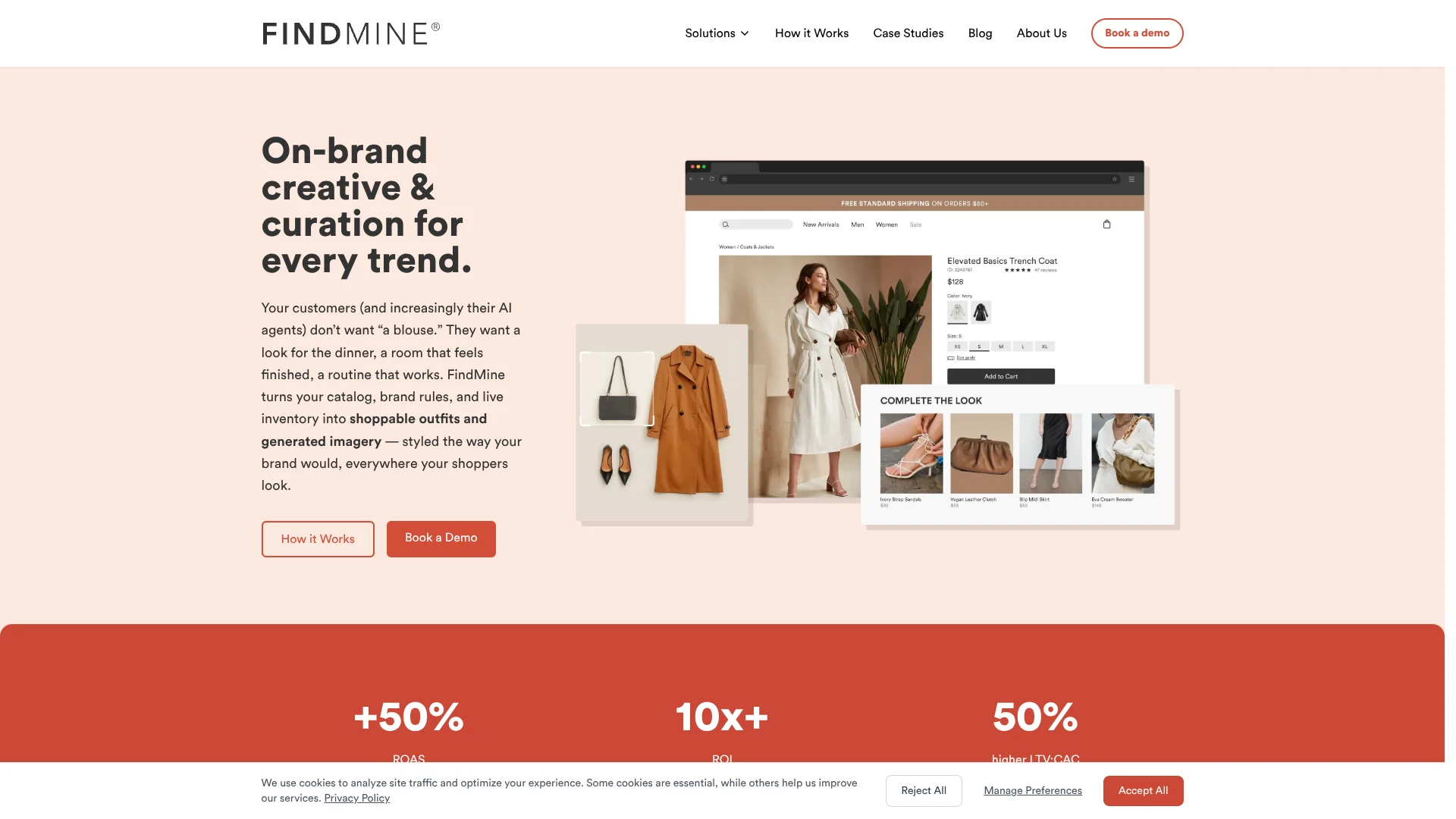
FindMine turns a retailer’s product catalog into shoppable outfits and product bundles that follow the brand’s styling rules. Ecommerce, marketing, and merchandising teams use it to give shoppers ideas for how products work together, across online stores and other retail channels.
Its styling connects each look to the retailer’s catalog and live inventory, so recommendations can reflect what is in stock and what the brand wants to feature. FindMine also creates imagery and updates content as products, stock, and trends change.
FindMine is aimed at retail brands with sizable catalogs and multiple customer channels, rather than shoppers looking for personal styling advice. Its value depends on connecting it to a product catalog and retail systems, so it is a better fit for businesses ready to plan an implementation than for individuals seeking a self-serve tool.
Who is Using Findmine?
Ecommerce Director
Improves product discovery by adding Complete the Look content to product pages and collections.
Performance Marketer
Builds outfit-based ad creative and product-feed content for paid social.
Digital Merchandiser
Sets category priorities and brand rules for catalog-wide styling.
Email Marketing Manager
Adds dynamically updated outfit recommendations to email campaigns through supported integrations.
Uncommon Use Cases
Enriches product catalogs for AI shopping agents; supports in-store associates with complete-look recommendations.
Key Features
Rating Breakdown
Pricing Plans
Free Trial
- Experience Findmine with a 30-day free trial
Standard Plan
$500 per month
- Depending on the volume of products
Which Findmine plan should you pick?
Start with a demo to discuss the catalog, channels, and value-based pricing; the official site does not publish plan tiers.
Findmine Use Cases
Complete product-page looks
A product page can show a coordinated outfit or set, rather than leaving shoppers to pair items themselves.
Outcome: Shoppers can discover and buy complementary products together.
Outfit-based advertising
Product ads can feature shoppable outfit collages tied to the retailer’s catalog and inventory.
Outcome: A/B-tested Meta dynamic product ads showed a 50% ROAS lift in one featured case study.
Trend-led merchandising
Retail teams can tag catalog looks to selected trends and use them in storefronts, ads, and product feeds.
Outcome: Trend content connects to current, shoppable inventory.
Catalog preparation for AI shopping
Product attributes and styling context help shopping agents return relevant products as complete answers.
Outcome: AI agents can query product data with styling and stock context.
In-store styling support
Store associates can show customers complete looks and complementary products.
Outcome: Customers can see how items work together while shopping in person.
Workflow Ideas with Findmine
Launch shoppable looks on product pages
- 1Connect the product catalog and inventory feed.
- 2Set brand rules and merchandising priorities.
- 3Add Complete the Look content to product pages.
Build trend-based campaign creative
- 1Choose the trends or occasions the brand wants to feature.
- 2Tag relevant catalog looks and create campaign assets.
- 3Send the creative and trend labels to advertising channels.
Prepare product data for AI shopping agents
- 1Enrich catalog items with styling and occasion attributes.
- 2Connect the MCP server to supported shopping-agent workflows.
- 3Return products with relevant styling context and stock information.
How Findmine fits into your stack
Commerce platforms
Shopify has a plug-in option, while Salesforce and SAP Commerce Cloud have platform cartridge integrations.
Product catalogs and feeds
Catalog data can connect through APIs or feeds, including Feedonomics for syndicating outfit data.
Email marketing
FindMine supports feed and API integrations with email platforms, including Klaviyo, Listrak, Bluecore, SFMC, and Movable Ink.
Advertising channels
FindMine outfit data can support dynamic product ads on Meta and other feed-based channels.
Custom storefronts and AI shopping
A hosted widget, API-first integration, or MCP server can deliver styling content to custom experiences and AI shopping agents.
Pros
- +Catalog-scale styling: Automatically creates looks across a large product assortment.
- +Inventory awareness: Keeps recommendations tied to available products.
- +Brand guardrails: Applies merchandising priorities and styling rules to generated content.
- +Channel coverage: Delivers outfit content to storefronts, email, ads, apps, and in-store experiences.
Cons
- −Retail-specific: Its styling and catalog features are built for retailers, not personal use.
- −Implementation work: Most deployments require connecting product data and retail channels.
- −Pricing opacity: The website does not publish a standard plan price.
Limitations & when to consider alternatives
Look elsewhere when
- You need a self-serve personal styling app rather than retail software.
- Your team needs a published, fixed subscription price before booking a demo.
- Your project does not involve a product catalog or retail channels.
How to Use Findmine
- 1
Book a product demo
FindMine directs prospective customers to a demo so they can discuss their catalog and retail channels.
- 2
Choose the creative approach
Decide whether to make existing photography shoppable, combine existing assets with generated content, or use AI-generated creative.
- 3
Connect catalog and inventory data
Choose a supported route such as Shopify, Salesforce, SAP Commerce Cloud, an API, or a product feed.
- 4
Set brand and business rules
Define styling guardrails, category priorities, price bands, and products to push or protect.
- 5
Select customer channels
Choose where to deliver looks, such as product pages, email, ads, mobile apps, or in-store experiences.
- 6
Review performance and updates
Track coverage and performance while FindMine refreshes content as inventory, prices, products, and trends change.
Who is Findmine For?
Ecommerce Leaders
Connect product pages and collections to shoppable looks that can support discovery and sales.
Marketers
Create on-brand, trend-aware creative for product advertising and other campaigns.
Merchandisers
Set styling and product priorities that FindMine can apply across the catalog.
Retail Brands
Keep product inspiration consistent across apparel, home, beauty, and other retail categories.
Frequently Asked Questions
Does FindMine publish its pricing?
The official site describes its pricing model as value-based and directs prospective customers to book a demo. It does not list a standard plan price.
Which commerce platforms does FindMine support?
The site names Shopify, Salesforce Commerce Cloud, and SAP Commerce Cloud, alongside API and feed-based integration options.
Can FindMine create imagery as well as outfit recommendations?
Yes. Its AI Stills & Video offering creates imagery and short videos from a retailer’s catalog, guided by brand rules and inventory.
Can FindMine connect to email and advertising channels?
Yes. The site describes integrations for email platforms and Meta dynamic product ads, as well as feed and API options.
Does FindMine support AI shopping agents?
FindMine offers an MCP server that lets AI shopping agents query a catalog with styling logic and stock information.
Community reviews
Be the first to share your experience.
Sign in to leave a review for Findmine.
Findmine Alternatives
Looking for alternatives to Findmine? Here are similar tools in the same category: