
Sorted
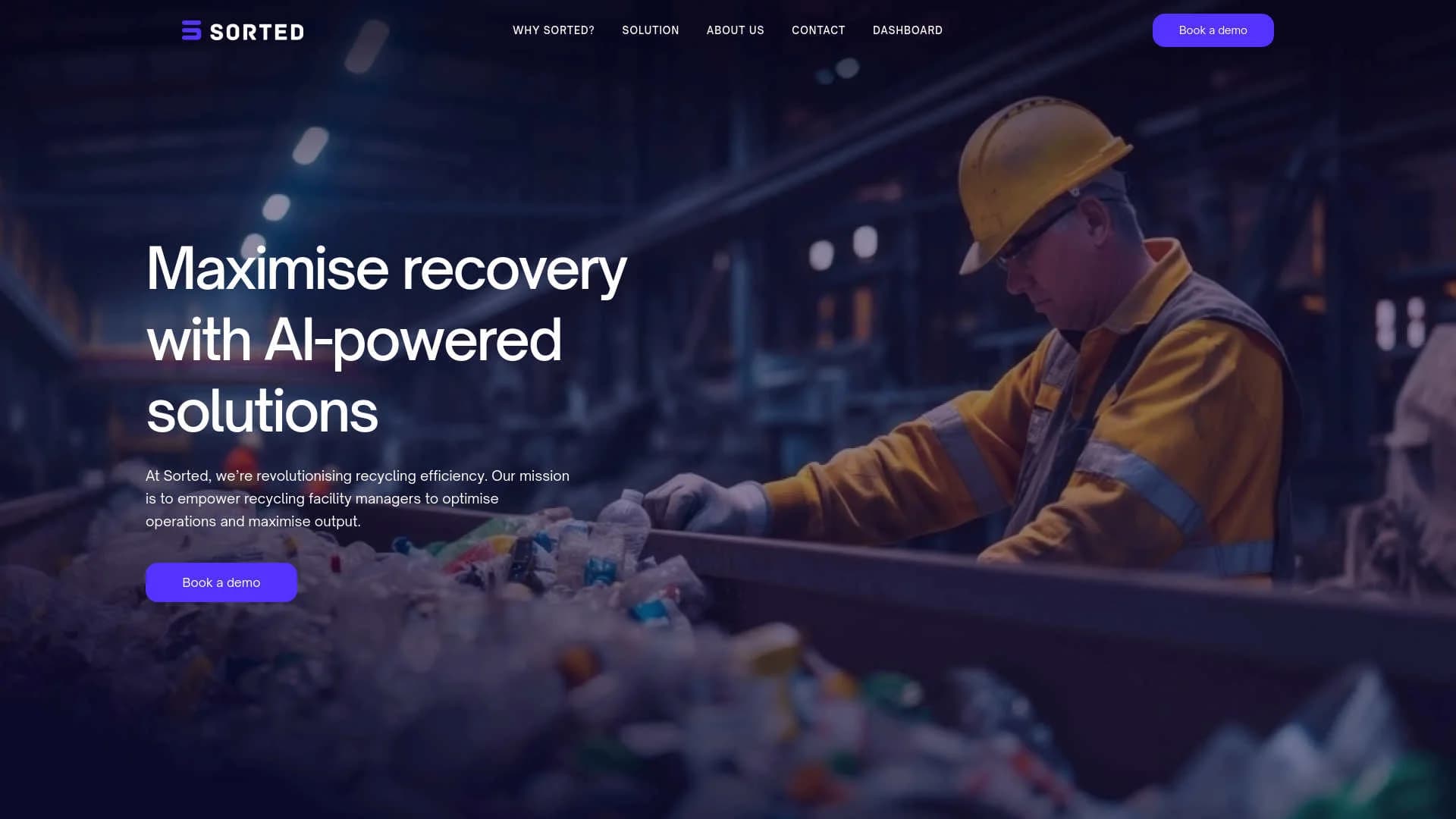
Revolutionize recycling with AI-driven, precise material sorting.
Key Takeaways
- What it is
- Revolutionize recycling with AI-driven, precise material sorting.
- Best for
- AI-Driven Sorting Technology
- Customizable Sorting Parameters
- User-Friendly Dashboard
- Rating
- 4.6/5
What is Sorted?
In today's eco-conscious world, the need for efficient recycling technologies is more pressing than ever. Sorted stands at the forefront of this movement with its cutting-edge AI-powered solutions designed specifically for waste management companies. The tool is engineered to enhance the sorting of recyclable materials, ensuring that fewer resources end up in landfills or incineration facilities. By focusing on the granular sorting of recyclable plastics based on resin and usage, Sorted meets the rigorous demands of the recycling industry, making it an invaluable asset for environmental sustainability.
Sorted distinguishes itself through its dedicated focus on enhancing recycling processes with AI technology. Its ability to sort recyclable materials with precision down to the resin level is a game-changer for the recycling industry. This unique selling point not only supports environmental sustainability but also helps companies meet stringent recycling standards and reduce operational costs.
Sorted excels in providing advanced, AI-driven solutions for sorting recyclable materials, making it an essential tool for any entity focused on enhancing their recycling efficiency. Its capability to customize sorting parameters and its impactful sustainability reporting offers an unmatched advantage in the recycling industry.
Who is Using Sorted?
Municipal Waste Management Agencies
Employing the tool to enhance city-wide recycling initiatives.
Industrial Manufacturers
Utilizing Sorted to recover and reuse materials from production waste.
Environmental NGOs
Leveraging the technology to monitor and improve recycling outcomes in various projects.
Educational Institutions
Using Sorted in environmental studies programs to teach sustainable waste management practices.
Uncommon Use Cases
Event organizers use Sorted for managing waste during large public events; Research centers apply the technology in studies of waste management innovations.
Key Features
Rating Breakdown
Pricing Plans
Subscription-Based Model
- Sorted offers tailored pricing plans based on the specific needs and scale of the user's operations
Which Sorted plan should you pick?
Start with Waste Audit Studio for photo-based reporting, then upgrade to Sorted Light or SortBot as your facility needs live guidance or automated picking.
Waste Audit Studio
Good for waste-management teams that need photo-based audits and export-ready composition reports without installing hardware.
Sorted Light
Good for MRFs that need real-time material detection, laser guidance, picker monitoring, and weekly operational reports.
SortBot
Good for facilities ready to automate quality-control or positive-recovery lines with robotic sorting and pay-as-you-go pricing.
Sorted Use Cases
Photo-based waste audits
Users photograph waste samples and upload the images to Waste Audit Studio for automated composition analysis.
Outcome: Detailed, export-ready waste audit reports.
Fibre quality control
SortBot recovers targeted fibre materials from a conveyor line.
Outcome: Improved recovery and quality control.
HDPE quality control
SortBot identifies and recovers HDPE items in a quality-control line.
Outcome: More consistent material recovery.
Aluminium quality control
SortBot detects and removes aluminium items from the conveyor stream.
Outcome: Higher recovery value and throughput.
Residue-line recovery
SortBot is positioned for recovery of recyclable materials from residue lines.
Outcome: Additional recyclable material recovered from waste streams.
Workflow Ideas with Sorted
Run a photo-based waste audit
- 1Capture photos of waste samples
- 2Upload the photos to Waste Audit Studio
- 3Review the generated composition analysis and report
Deploy guided picker assistance
- 1Install Sorted Light above the conveyor
- 2Calibrate the system for the facility's materials
- 3Use laser guidance and live metrics to improve picker performance
Automate material recovery
- 1Complete a technical assessment
- 2Install and calibrate SortBot during facility downtime
- 3Let the system detect, analyse, pick, eject, and report on target materials
How Sorted fits into your stack
Data Integration Capabilities
Smoothly integrates with existing waste management databases for seamless data flow.
Scalable Architecture
Designed to support both small-scale and large-scale operations.
Real-Time Monitoring
Integrates with real-time data monitoring systems to provide up-to-the-minute insights.
Pros
- +Enhanced Recycling Efficiency: Significantly improves the accuracy and speed of sorting recyclable materials.
- +Reduction in Waste: Helps reduce the volume of recyclables that mistakenly end up in landfills.
- +Customization Options: Adapts to various recycling requirements, making it versatile for different types of waste management scenarios.
- +Eco-Friendly Impact: Supports global environmental efforts by optimizing recycling processes.
Cons
- −Initial Setup Complexity: May require a detailed initial setup to fully customize sorting parameters.
- −Higher Cost for Advanced Features: The most sophisticated features might come at a higher price point, potentially limiting accessibility for smaller operations.
- −Dependency on Continuous Updates: Needs regular software updates to maintain optimal performance and adapt to new types of recyclable materials.
Limitations & when to consider alternatives
Known limitations
- Facility clearance requirements. SortBot requires a facility with at least 1.4 metres of clearance above the conveyor belt.
- Infrastructure requirements. Installation requires power, compressed air, and internet access, although Sorted may provide compressed air and internet in some cases.
- Designed for recycling operations. The products are purpose-built for MRFs, PRFs, waste audits, conveyor sorting, and material recovery rather than general-purpose AI work.
- Pricing varies by deployment. Rates vary according to the number of devices installed; SortBot pricing is pay-as-you-go and charged for active sorting hours.
- Model performance depends on calibration. Sorted describes initial algorithm calibration, regular testing, and model training using real facility materials.
How to Use Sorted
- 1
Explore the comprehensive tutorial offerings on the Sorted website, covering everything from basic setup to advanced operational techniques.
Who is Sorted For?
Waste Management companies
Waste Audit Studio helps them upload waste photos and generate composition reports and operational insights.
Facility Managers
They can use photo-based audits and sorting technology to understand waste composition and optimise facility operations.
Recycling Facilities
Sorted provides AI-powered audit, guided-picking, and robotic-sorting solutions for material recovery operations.
Staffing Agencies
Sorted lists staffing agencies among the industries it works with, particularly where picker performance and labour requirements matter.
Facility Builders
Sorted lists facility builders as an audience for retrofittable sorting technology designed around existing facility layouts.
Frequently Asked Questions
What materials can Sorted detect?
Sorted can identify common household and commercial recycling materials including cardboard, paper, plastics, aluminium, glass, fibre, other recyclable materials, and contaminants.
Can I tailor my solution?
Yes. Sorted says solutions can be tailored to target materials and facility design, with algorithms continuously improved based on customer needs.
Is Sorted SortBot compatible with my facility?
The SortBot is compatible with most facilities having at least 1.4 metres of clearance above the conveyor belt; Sorted can assess individual sites.
What do I need to provide to install a Sorted SortBot?
Installation requires access to power, compressed air, and internet. Sorted can provide compressed air and internet where coverage is available.
Can I add more than one SortBot?
Yes. Multiple sorting stations can operate side by side without requiring additional space or diminishing returns.
How long are the contracts?
Sorted describes monthly payment with flexible contracts and says it will take the solution back if the customer is dissatisfied.
Community reviews
Be the first to share your experience.
Sign in to leave a review for Sorted.
Sorted Alternatives
Looking for alternatives to Sorted? Here are similar tools in the same category:
Learn to Master Sorted
With Skill Leap courses
Get in-depth training on Sorted and 50+ other AI tools with our expert-led video courses.
Start 7-Day Free Trial