ChatGPT
The versatile AI assistant for everyday questions, writing, and code.
Watch ChatGPT in Action
Key Takeaways
- What it is
- The versatile AI assistant for everyday questions, writing, and code.
- Pricing
- Freemium · $8 per month · $20 per month · $25 per user per month
- Best for
- ChatGPT Search
- Deep Research
- File and Image Analysis
- Rating
- 4.6/5
What is ChatGPT?
ChatGPT can explain a difficult concept, draft a message, or analyze a spreadsheet in a conversation, then use web search when an answer needs current information. It is built for people who want help with everyday questions as well as longer work, such as researching a topic or working through documents. Voice, image understanding, and data analysis give it ways to work beyond typed questions.
ChatGPT Work can take on multi-step tasks across connected apps and supported websites, then pause for your input or approval when needed. That means a task can involve researching information and preparing a finished document, rather than stopping at a list of suggestions.
ChatGPT suits people who want one place to ask questions, work with files, and revisit ongoing projects, as well as teams that need shared workspaces. Its main tradeoff is that usage limits vary by plan, and a ChatGPT subscription does not include separate OpenAI API access.
Who is Using ChatGPT?
Writers and editors
Drafts, rewrites, and summaries help move a piece from rough notes to a clearer version.
Analysts
Data analysis can explore spreadsheet data, summarize patterns, and create visualizations.
Researchers
Deep Research gathers and synthesizes online sources into a cited report.
Software developers
Code generation and debugging help explain errors, draft code, and work through software tasks.
Educators and learners
Conversational explanations and voice practice can support studying and language learning.
Uncommon Use Cases
A photo of a handwritten recipe can be transcribed; voice conversations can be used to practice a language.
Key Features
Rating Breakdown
Pricing Plans
Free
Free
- Unlimited text chats, subject to abuse guardrails.
- Limited messages with uploads, image creation, voice chats, and Deep Research.
Go
$8 per month
- More messages with tools, uploads, image creation, and voice chats than Free.
- Longer memory; this plan may include ads.
Plus
$20 per month
- Advanced reasoning models and expanded Deep Research.
- Projects, scheduled tasks, custom GPTs, and expanded Codex usage.
Pro
- Pro is offered in $100, $200, and $500 monthly tiers.
- Higher tiers include expanded usage for Codex and ChatGPT Work.
Business
$25 per user per month
- Monthly billing; annual billing is $20 per user per month, billed annually.
- Requires at least two paid seats; includes a shared workspace and SSO.
Enterprise
- Contact OpenAI for Enterprise plan details.
Which ChatGPT plan should you pick?
Start with Free for occasional questions, choose Go or Plus for more access, and consider Pro or a workspace plan when your work needs higher limits or team controls.
Free
Good for trying ChatGPT and handling everyday questions with limited access to several tools.
Go
Good for individual use when you want more messages, uploads, image creation, and memory than Free.
Plus
Good for regular individual work that benefits from expanded access to reasoning, Deep Research, Projects, and custom GPTs.
Pro
Good for individuals who need the highest usage levels and expanded access to research, coding, and projects.
Business
Good for teams that need a shared workspace, administration, and SSO.
Enterprise
Good for organizations seeking enterprise-level security and controls, with plan details arranged through OpenAI.
ChatGPT Use Cases
Research a question
Deep Research brings information from multiple online sources into a cited, structured report.
Outcome: A report with sources to review.
Understand a document
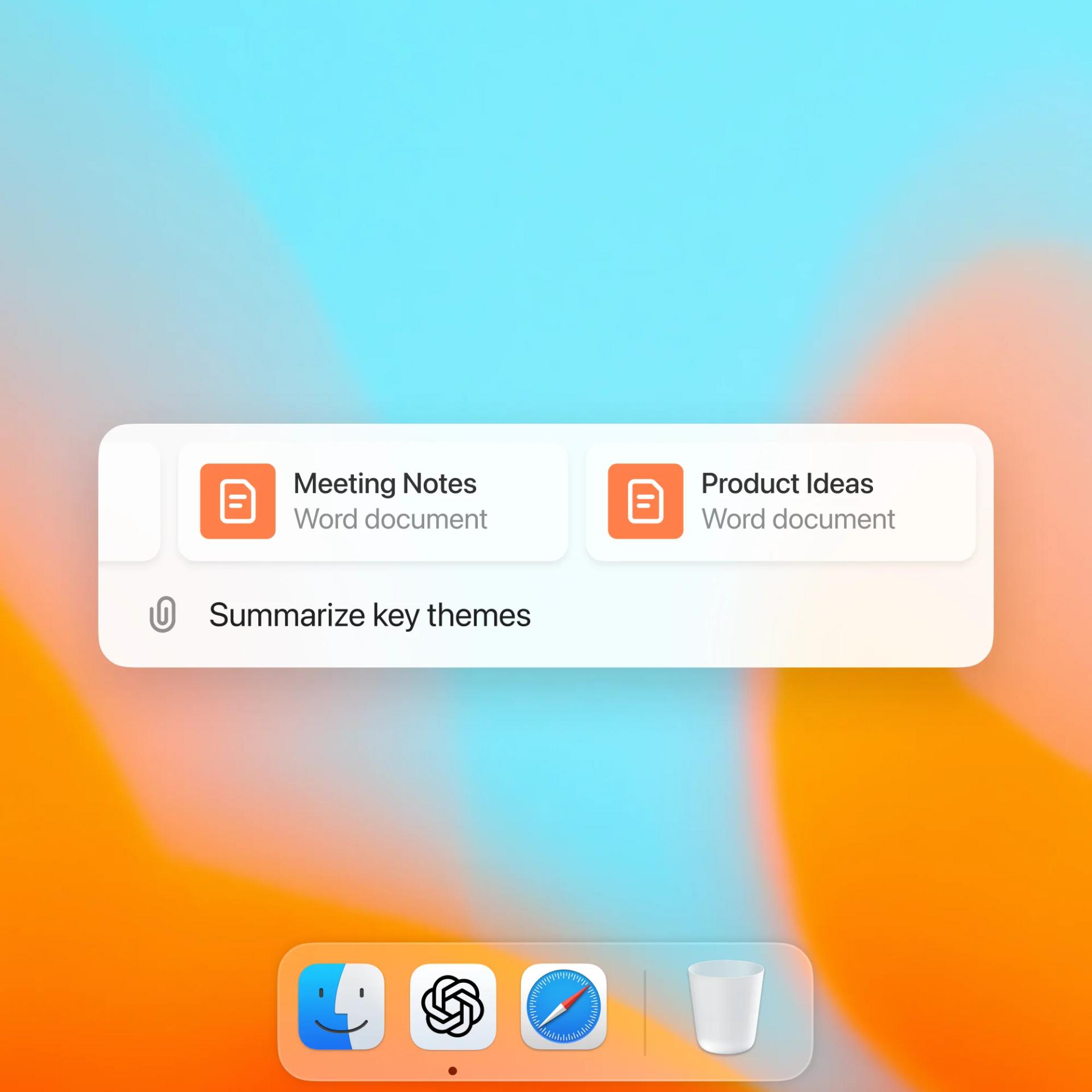
Questions about an uploaded file can surface key points without reading every page first.
Outcome: A summary or answers grounded in the file.
Explore spreadsheet data
Data analysis can examine structured data, find trends, and create visualizations.
Outcome: A clearer view of patterns in the data.
Draft and revise writing
A conversation can turn notes into a draft and refine its wording for a particular purpose.
Outcome: A draft tailored to the requested purpose.
Keep recurring work on track
Scheduled Tasks can run reminders or recurring checks and notify you when a task has an update.
Outcome: A scheduled task with notifications.
Workflow Ideas with ChatGPT
Turn research into a brief
- 1Describe the question and the kind of sources that matter.
- 2Run Deep Research and review its cited findings.
- 3Ask ChatGPT to shape the findings into a brief for your audience.
Review a spreadsheet
- 1Upload the spreadsheet and explain what decision or question it relates to.
- 2Ask Data Analysis to summarize trends or compare relevant values.
- 3Review the results and request a visualization if it would help.
Set up a recurring check
- 1Describe the information or change you want ChatGPT to monitor.
- 2Create a Scheduled Task and choose its timing or supported app trigger.
- 3Review the instructions, connected apps, and notifications.
How ChatGPT fits into your stack
Web and mobile
ChatGPT is available through its website and official iOS and Android apps. Conversations can include voice, images, and file uploads.
Desktop and browser
The macOS and Windows desktop apps bring ChatGPT Work and Codex alongside chat. A browser extension can bring open tabs into supported workflows.
Files and projects
Projects organize related conversations, files, and instructions. Data Analysis can work with uploaded spreadsheets and other structured data.
Connected apps and tasks
Apps can connect ChatGPT with services such as Google Drive and Slack. Scheduled Tasks can run supported recurring or event-triggered work.
Developer tools
ChatGPT can generate and debug code, while Codex supports software development tasks. OpenAI API usage is separate from ChatGPT subscriptions.
Pros
- +Flexible input: Work through text, uploaded files, images, and voice conversations.
- +Source-backed research: Deep Research can produce structured findings with citations.
- +Ongoing work: Projects keep related chats, files, and context together.
- +Multiple ways to access it: ChatGPT is available on the web, mobile, and desktop, with a browser extension.
Cons
- −Plan-dependent access: Usage limits and available tools vary across plans.
- −Separate API billing: A ChatGPT subscription does not include OpenAI API usage.
- −Review still matters: Check important answers and approve consequential actions before relying on them.
Limitations & when to consider alternatives
Known limitations
- Usage limits vary by plan. Limits for messages and tools depend on the subscription, and may also be affected by temporary restrictions during high demand.
- Scheduled Tasks have restrictions. Tasks do not support voice chats, GPTs, or locked chats; event-triggered tasks require an eligible paid plan and supported connected apps.
- Connected app availability varies. Access to a particular app or plugin depends on the plan, workspace, role, and ChatGPT surface.
- Website tasks may not work everywhere. A website can block ChatGPT Work from accessing it or completing a task, and support varies by website and action.
Look elsewhere when
- You need API usage included with your subscription rather than billed separately.
- Your workflow depends on an app or website that ChatGPT does not support.
- You need higher or guaranteed usage limits than your plan provides.
How to Use ChatGPT
- 1
Start with a specific goal
Say what you are trying to finish and include relevant context, so ChatGPT can tailor its answer.
- 2
Choose the right tool
Use web search for current information, Deep Research for multi-source research, or Data Analysis for structured data.
- 3
Add source material
Upload a document, spreadsheet, or image when the answer should be based on that material.
- 4
Refine the response
Ask for a different format, more detail, or a revision that fits your intended reader.
- 5
Save ongoing work in a Project
Group related chats, files, and instructions under a shared objective for work that spans multiple conversations.
- 6
Check important details
Review cited sources and verify consequential information before acting on it.
Who is ChatGPT For?
Everyday ChatGPT users
People looking for help with questions, writing, learning, and problem-solving can use ChatGPT in a natural conversation.
Researchers and knowledge workers
Deep Research, web search, and file analysis help turn scattered sources into a useful brief.
People working with documents and data
Uploaded files and data analysis support document review, spreadsheet exploration, and visual summaries.
Teams
Business and Enterprise workspaces add shared access, administration, and workspace controls.
People learning to code
ChatGPT can write or debug code and explain programming concepts in plain language.
Frequently Asked Questions
Is ChatGPT free?
Yes. The Free plan provides access with limits on features such as uploads, image creation, voice, Deep Research, and memory.
How much do ChatGPT plans cost?
The US monthly prices listed for individuals are $8 for Go and $20 for Plus. Pro starts at $100 per month, and Business is $25 per user per month on monthly billing.
Does a ChatGPT subscription include API access?
No. OpenAI API usage is billed separately from ChatGPT subscriptions.
Can ChatGPT connect to other apps?
Yes. Apps can connect services such as Google Drive or Slack, though availability depends on your plan, workspace, role, and surface.
Can I use ChatGPT on my phone and computer?
Yes. OpenAI offers iOS and Android apps, as well as desktop apps for macOS and Windows.
Products in the ChatGPT family


Community reviews
9 reviews from people who use ChatGPT.
Sign in to leave a review for ChatGPT.
Austin Levine
El-kufahn Muhammad Ahmad
ty.
vtmnts666-
nico is so cool
Vivek Varma
Antonio Vera
Gabor Toth
Md Maidul Islam
ChatGPT Alternatives
Looking for alternatives to ChatGPT? Here are similar tools in the same category: